What is co-extrusion?
Co-extrusion is the process of extruding multiple polymers simultaneously through a single die, fusing them into one multilayer film in a single continuous operation. A modern 7-layer line can produce a film that would otherwise require 3-4 separate laminations — saving time, adhesive, and money.
The line at a glance
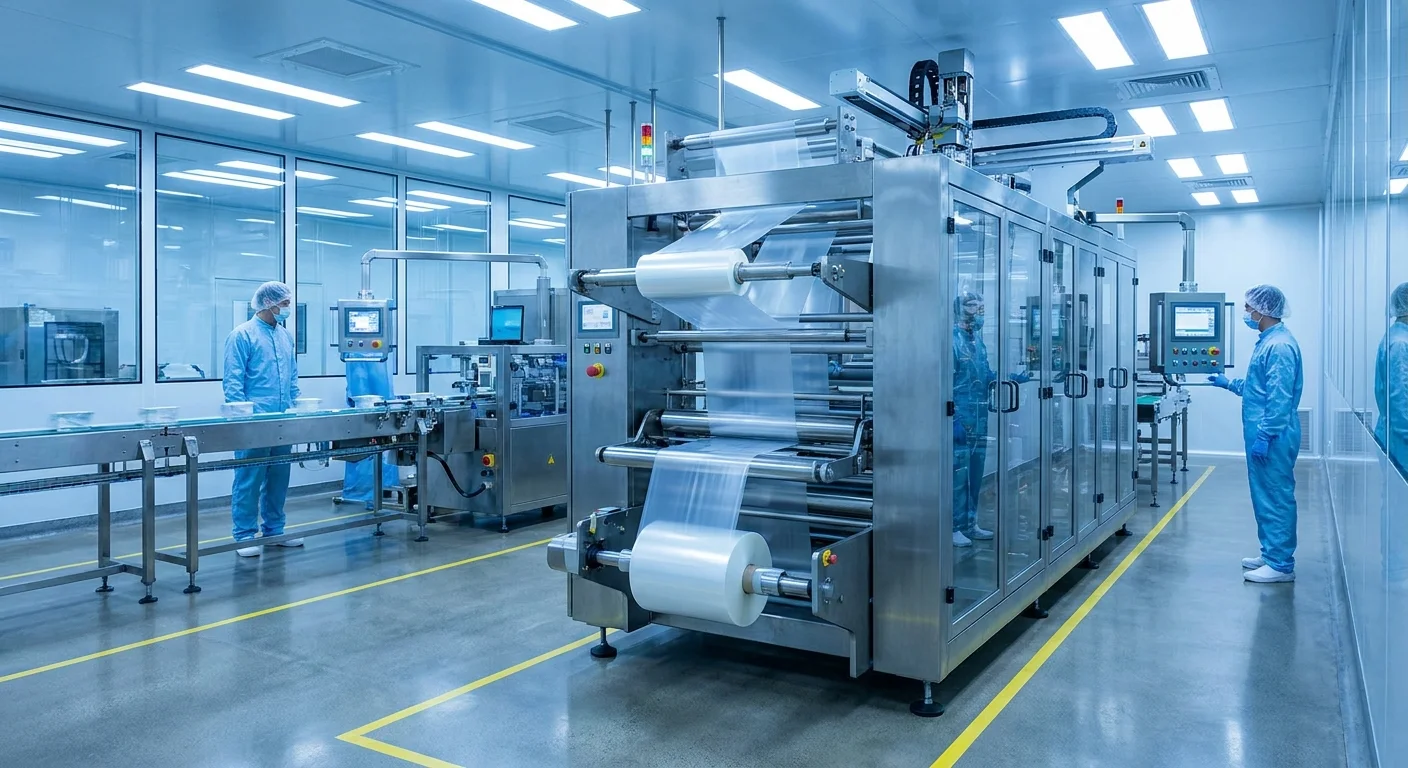
A multilayer co-extrusion line has four main zones:
- Extruders — one for each resin. A 7-layer film needs 7 extruders, each melting and pressurizing its own polymer (EVOH, PA, PE, tie resin, etc.) at temperatures between 180°C and 260°C.
- Feedblock + die — channels all 7 melt streams into a precise layered arrangement, then spreads them to the final film width (typically 1.2-2.5 m flat-die, or annular die for blown film).
- Cooling & orientation — for cast film, the melt is quenched on a chilled roll; for blown film, it's inflated into a bubble and air-cooled.
- Winding & slitting — the finished film is trimmed, slit to customer widths, and wound into rolls.
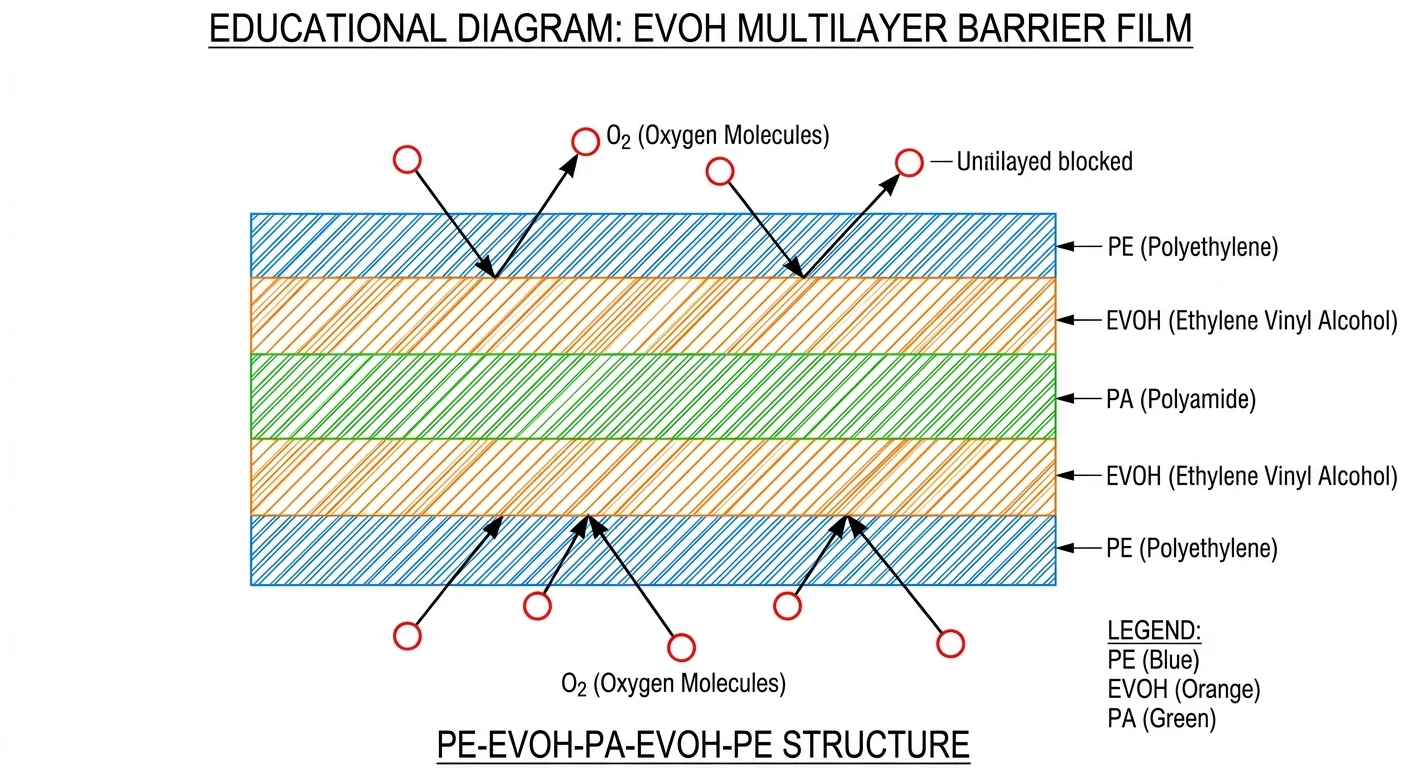
Layer by layer: a typical 7-layer structure
For high-barrier food packaging, a 7-layer cast film typically looks like this:
- PE (outer) — print surface, sealable, printable
- PE — bulk layer for cost and stiffness
- Tie resin — adhesive bonding layer
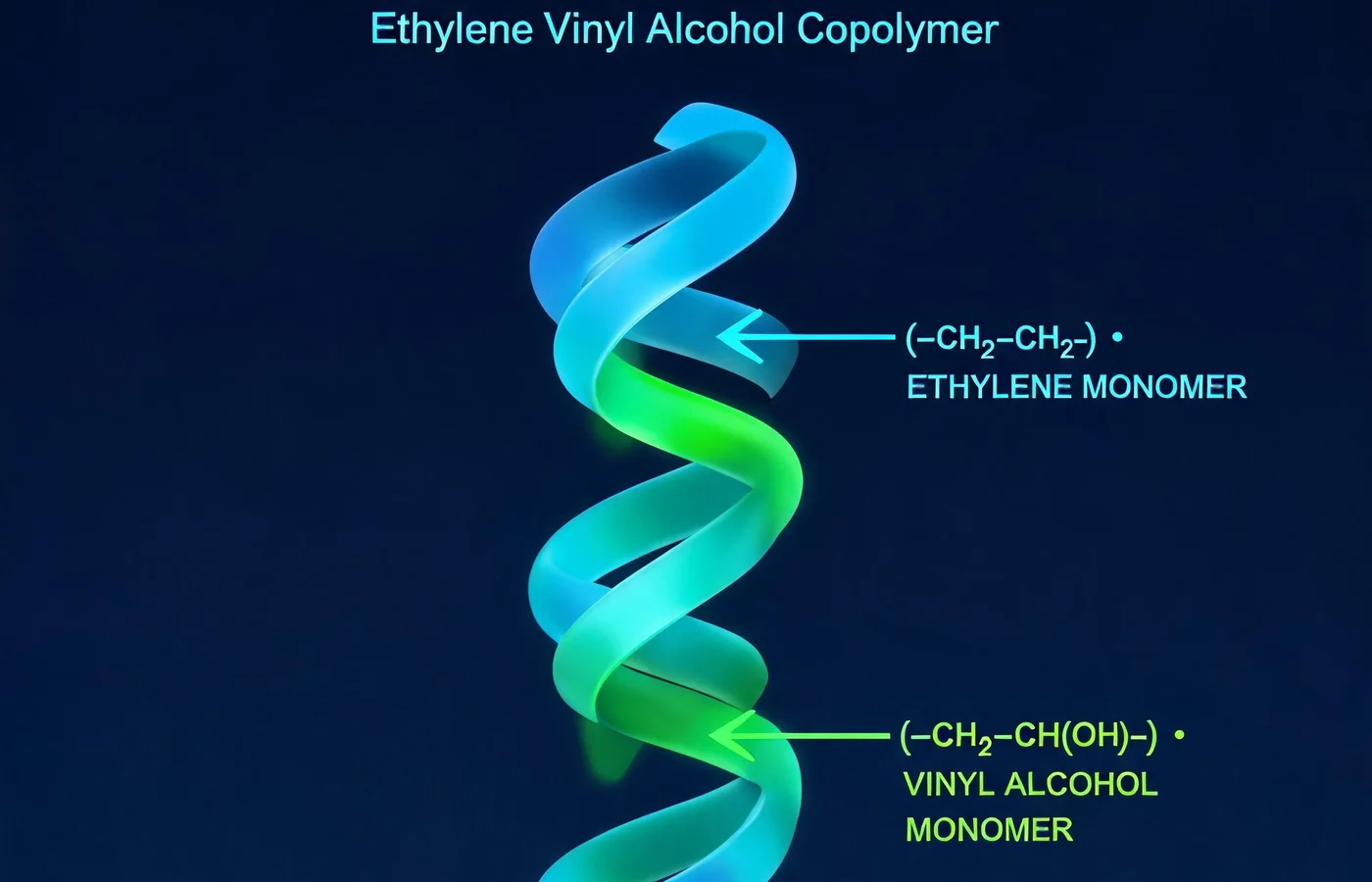
- EVOH — the oxygen barrier (typically 5-15 μm)
- Tie resin — adhesive bonding layer
- PA (nylon) — toughness + humidity protection for EVOH
- PE (inner) — food contact layer, heat-sealable
Total thickness is typically 60-200 μm, with EVOH representing only 5-10% of the total. The other 90-95% is structural and seal PE/PA — but the package is only as good as its thinnest functional layer.
Why manufacturers use multilayer structures
- Cost efficiency — use expensive EVOH only where it's needed (5-15 μm), and bulk up with cheaper PE
- Customized barrier — adjust EVOH thickness to dial in exactly the OTR your product needs
- Mechanical performance — combine PA's puncture resistance with PE's sealability
- Single-process production — no need for separate adhesive lamination steps
- Recyclable mono-material versions — PE / EVOH / PE structures work with PE recycling streams
Cast vs blown — which process?
Cast film is made by extruding through a flat die and quenching on a chilled roll. It produces a stiffer, clearer, higher-gloss film with excellent gauge uniformity. Best for: high-clarity packaging, printing, lamination, food contact.
Blown film is made by extruding through an annular die and inflating into a bubble. It produces a tougher, more impact-resistant film with balanced orientation. Best for: heavy-duty bags, shrink film, applications requiring high tear strength.
Most high-barrier food packaging films are produced by cast co-extrusion. For a deeper look at the differences, see our cast film and blown film product pages.
Quality control: what we test
At FreshFlex, every production run is tested for:
- Oxygen transmission rate (OTR) per ASTM D3985
- Moisture vapor transmission rate (MVTR) per ASTM F1249
- Tensile strength and elongation per ASTM D882
- Heat seal strength per ASTM F88
- Puncture and impact resistance
- Coefficient of friction (COF) for machinability
- Optical properties (haze, gloss)
For buyers, the key specs to request from any supplier are OTR (the lower the better for sensitive products) and seal strength (consistency matters for high-speed packing lines).