Why Baby Food Packaging Demands High-Barrier Protection
Baby food is one of the most sensitive product categories in the food industry. Its delicate nutritional profile—often rich in vitamins, lipids, and proteins—is highly susceptible to oxygen, moisture, and light. Even minor exposure can lead to nutrient degradation, off-flavors, and compromised safety. For manufacturers and brand owners, choosing the right packaging material is not just a quality decision; it's a regulatory and reputational imperative.
Among the available high-barrier solutions, EVOH (ethylene vinyl alcohol) film has emerged as a preferred choice for baby food packaging. Its exceptional oxygen barrier properties, combined with flexibility and compatibility with retort and hot-fill processes, make it ideal for pouches, cups, and lidding films. This article explores the technical and commercial considerations for sourcing EVOH film for baby food applications.
Understanding EVOH Film: Composition and Barrier Performance
EVOH is a copolymer of ethylene and vinyl alcohol. Its molecular structure creates a highly tortuous path for gas molecules, resulting in outstanding oxygen barrier performance—typically 10 to 100 times better than standard polyethylene or polypropylene at equivalent thickness. The barrier efficiency depends on the ethylene content: lower ethylene grades offer superior oxygen barrier but are more moisture-sensitive, while higher ethylene grades balance barrier with humidity resistance.
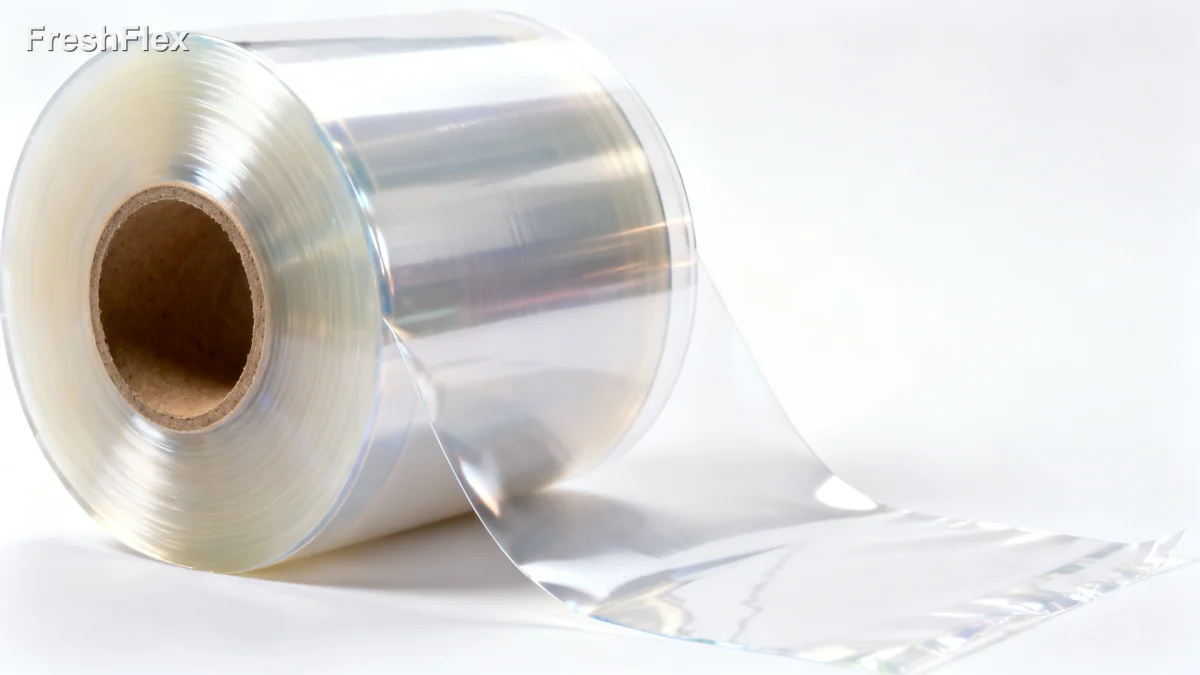
In multilayer film structures, EVOH is usually encapsulated between layers of polyethylene or tie layers to protect it from moisture. This design ensures that the EVOH core remains dry and functional. For baby food, common structures include:
- Pouches: PET / Tie / EVOH / Tie / PE or PP, often with a sealant layer for leak-proof performance.
- Lidding films: EVOH-based films with peelable sealants for cups and trays.
- Thermoformed cups: EVOH coextruded with PP or PS for rigid or semi-rigid containers.
These structures deliver oxygen transmission rates (OTR) that can be below 1 cc/m²/day under dry conditions, significantly extending the shelf life of oxygen-sensitive purees, juices, and dairy-based baby foods.
Key Benefits of EVOH Film for Baby Food Packaging
1. Extended Shelf Life Without Refrigeration
Baby food often requires ambient distribution to reach diverse markets. EVOH film helps maintain product quality for 12 to 24 months, depending on the formulation and processing method. This reduces reliance on cold chain logistics, lowering costs and expanding geographic reach.
2. Nutrient Retention
Vitamins A, C, and E, as well as omega-3 fatty acids, are prone to oxidation. By minimizing oxygen ingress, EVOH packaging helps preserve these nutrients, supporting label claims and consumer trust.
3. Flavor and Aroma Protection
Baby food has a mild flavor profile that can be easily tainted by external odors or scalping. EVOH acts as an effective barrier against volatile organic compounds, ensuring taste integrity.
4. Retort and Hot-Fill Compatibility
EVOH films can be engineered to withstand retort temperatures up to 121°C and hot-fill processes, making them suitable for sterilized baby food products. Proper selection of tie layers and sealants is critical to prevent delamination or barrier loss.
5. Regulatory Compliance
Food-contact EVOH grades meet stringent regulations, including FDA and EU 10/2011, and are free from bisphenol-A (BPA) and phthalates. This is particularly important for baby food, where safety standards are highest.
Technical Specifications to Evaluate When Sourcing EVOH Film
When specifying EVOH film for baby food, buyers should consider the following parameters:
| Parameter | Typical Range | Considerations |
|---|---|---|
| Ethylene content | 24–48 mol% | Lower for high oxygen barrier; higher for humidity resistance |
| Film thickness | 50–150 microns | Depends on pouch size, fill weight, and abuse resistance |
| OTR (dry) | <1 cc/m²/day | Measured at 23°C, 0% RH |
| WVTR | <5 g/m²/day | Critical for moisture-sensitive powders |
| Seal strength | >30 N/15mm | Ensures leak-proof seals for liquid purees |
| Retort resistance | Up to 121°C | Validate with actual product and process |
These values are indicative; actual performance varies with structure, resin grade, and processing conditions. Always request comprehensive technical data sheets and samples for pilot testing.
Application Guidance: Matching EVOH Film to Baby Food Formats
Pouches for Purees and Smoothies
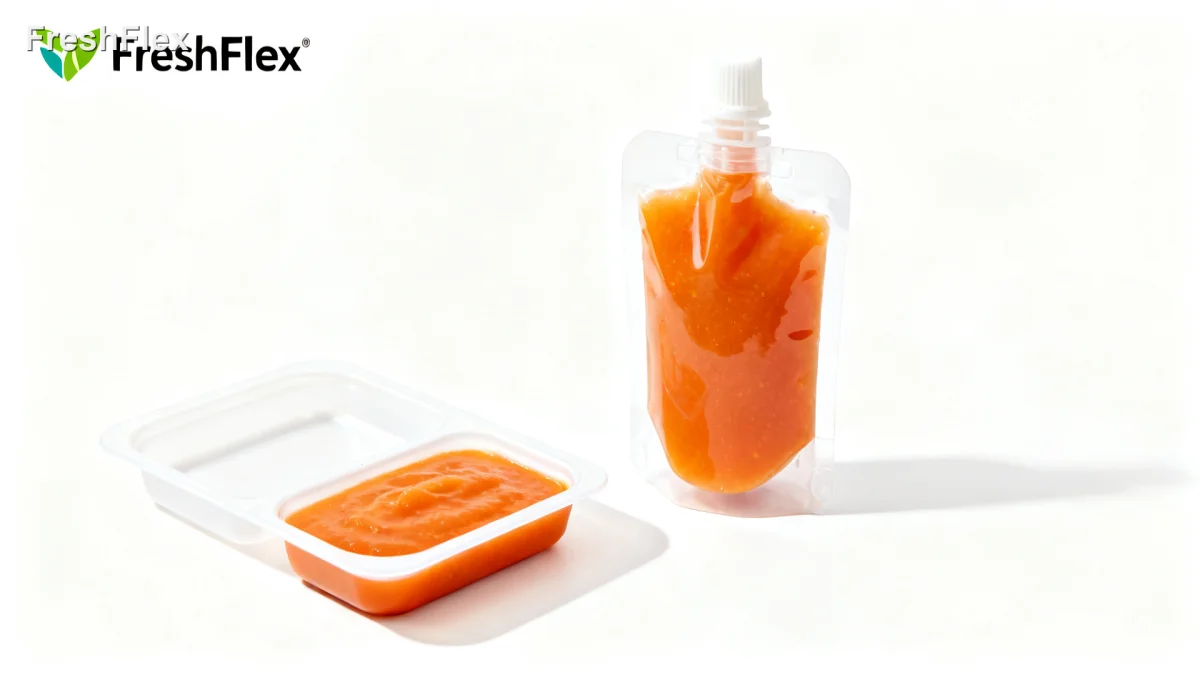
Spouted pouches are a popular format for baby food purees. EVOH-containing laminates provide the necessary barrier to prevent oxidation and maintain pouch integrity during handling. Key requirements include high puncture resistance, flex-crack resistance, and a reliable spout seal.
Lidding Films for Cups and Trays
For yogurt, custard, and fruit purees, EVOH lidding films offer excellent oxygen barrier and peelability. They can be designed for easy-open or weld-seal applications, with anti-fog properties for refrigerated display.
Thermoformed Containers
Rigid or semi-rigid cups made from EVOH/PP or EVOH/PS structures are ideal for single-serve baby meals. They provide excellent top-load strength and can be retort-sterilized for ambient shelf life.
Dry Powder Packaging
Baby formula and cereal powders require protection against moisture and oxygen. EVOH films with high moisture barrier sealants help prevent caking and nutrient loss.
Cost-Benefit Analysis: Is EVOH Worth the Investment?
EVOH film typically costs more than standard PE or PP films—often 20–50% higher per square meter, depending on structure and volume. However, the total cost of ownership should be evaluated holistically:
- Reduced product waste: Longer shelf life means fewer returns and less spoilage.
- Logistics savings: Ambient distribution eliminates cold chain costs.
- Premium positioning: High-barrier packaging supports clean-label and nutrient-preservation claims, justifying a higher retail price.
- Regulatory risk mitigation: Compliance with safety standards avoids recalls and legal issues.
For many baby food brands, the incremental packaging cost is offset by improved brand equity and operational efficiency. A pilot trial with your specific product is the best way to quantify the return.
Working with FreshFlex for Your EVOH Film Needs
FreshFlex specializes in high-barrier EVOH films tailored for sensitive food applications. We offer a range of structures, thicknesses, and sealant options to match your baby food format. Our technical team supports customers in Vietnam, Indonesia, and Thailand with:
- Material selection and structure design.
- Pilot trials and performance testing.
- Regulatory documentation and compliance support.
- Supply chain reliability and local inventory.
To discuss your baby food packaging requirements, contact us for a consultation and sample request.