Material Selection: Why EVOH?
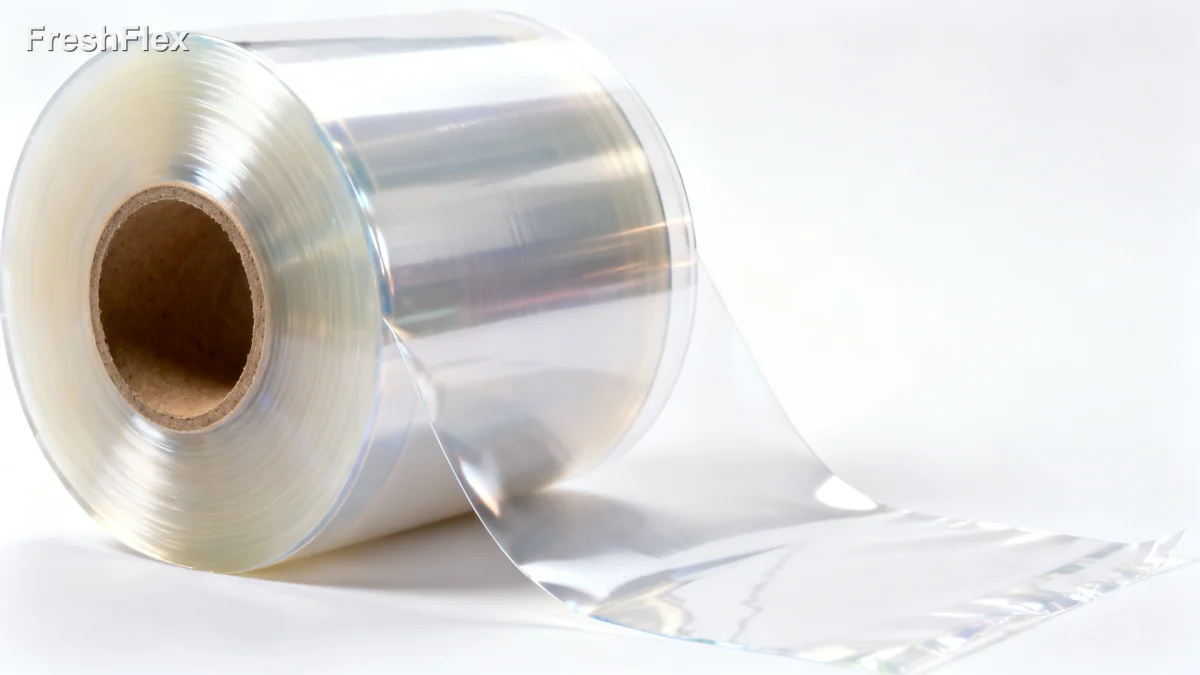
Ethylene vinyl alcohol (EVOH) copolymer is renowned for its exceptional oxygen and aroma barrier properties, making it a preferred choice for pharmaceutical packaging where product stability is critical. Unlike other barrier materials, EVOH offers a unique combination of transparency, toughness, and resistance to oils and organic solvents. When selecting EVOH film for pharmaceutical applications, consider the ethylene content: lower ethylene content (e.g., 27-32 mol%) provides superior barrier performance but may require careful handling due to moisture sensitivity. Higher ethylene content (e.g., 38-44 mol%) offers better moisture resistance and processability but slightly reduced oxygen barrier. FreshFlex offers a range of EVOH film grades tailored to pharmaceutical needs, ensuring compliance with stringent industry standards.
Multilayer Structure Design
EVOH is rarely used as a standalone film in pharmaceutical packaging due to its moisture sensitivity. Instead, it is typically incorporated as a core layer in multilayer structures, sandwiched between moisture-resistant polymers such as polyethylene (PE) or polypropylene (PP). A common configuration is PE/EVOH/PE or PP/EVOH/PP, where the outer layers protect EVOH from moisture, preserving its barrier properties. For pharmaceutical blister packs, EVOH can be combined with PVC or COC to enhance moisture and oxygen protection. The design must balance barrier requirements, mechanical strength, and sealability. FreshFlex technical team can assist in optimizing layer thickness and structure to meet specific drug protection needs.
Film Production and Quality Control
Manufacturing EVOH film for pharmaceutical use demands precise control over extrusion and lamination processes. FreshFlex employs state-of-the-art co-extrusion lines with inline thickness gauging and defect detection to ensure consistent barrier performance. Key quality parameters include oxygen transmission rate (OTR), typically measured in cc/m²/day, and moisture vapor transmission rate (MVTR). For pharmaceutical grades, OTR values are often below 1 cc/m²/day at 23°C and 50% RH, depending on structure. Each production batch undergoes rigorous testing for thickness uniformity, gel count, and mechanical properties. Our facilities adhere to ISO 9001 and GMP guidelines, providing documented traceability for pharmaceutical customers.
Regulatory Compliance and Certification
Pharmaceutical packaging materials must comply with regional regulations such as USP <661>, EU Pharmacopoeia, and FDA 21 CFR. EVOH film used in drug packaging should be tested for biocompatibility, extractables, and leachables. FreshFlex provides EVOH films that meet USP Class VI requirements and are supported by Drug Master Files (DMF) where applicable. Additionally, our films can be supplied with certificates of analysis (CoA) and compliance statements for food contact and pharmaceutical use. It is essential to verify that the selected EVOH grade complies with the destination market's regulations, especially for products exported to Vietnam, Indonesia, and Thailand, where local pharmacopoeias may reference international standards.
Application in Pharmaceutical Packaging
EVOH film finds use in various pharmaceutical packaging formats, including:
- Blister packs: EVOH-based films enhance moisture and oxygen barrier, extending drug shelf life.
- Sachets and pouches: For powders, granules, and oral films, EVOH multilayer structures protect sensitive APIs.
- Bag-in-box systems: For liquid pharmaceuticals, EVOH provides an effective barrier against oxygen ingress.
- Strip packs: EVOH films offer transparency and barrier for unit-dose packaging.
When designing for these applications, consider the drug's sensitivity to oxygen and moisture, the required shelf life, and the packaging process (e.g., thermoforming, sealing). FreshFlex can provide technical guidance and samples for trials.
Cost-Benefit Analysis
While EVOH film may have a higher material cost compared to standard polymers like PE or PP, its superior barrier properties can lead to cost savings by extending product shelf life, reducing the need for desiccants or oxygen scavengers, and minimizing product waste. For high-value pharmaceuticals, the cost of EVOH is often justified by the protection it offers. Additionally, EVOH allows for down-gauging of packaging materials due to its efficiency, potentially offsetting material costs. A total cost of ownership analysis should consider material, processing, and logistics costs, as well as the risk of product degradation. FreshFlex offers competitive pricing and can help calculate the ROI for switching to EVOH-based packaging.
Future Trends and Sustainability
The pharmaceutical packaging industry is increasingly focusing on sustainability. EVOH is recyclable in multilayer structures where compatible layers are used, and ongoing developments aim to improve its recyclability. FreshFlex is committed to developing EVOH films with reduced environmental impact, including options with recycled content and designs for easier separation. As regulations evolve, staying informed about advancements in EVOH technology and recycling infrastructure will be crucial for pharmaceutical companies. Partnering with a knowledgeable supplier like FreshFlex ensures access to the latest innovations and support for regulatory changes.