Why EVOH Film Is the Go-To Barrier for Ready Meals
Ready meals are one of the fastest-growing food categories in Vietnam, Indonesia, and Thailand. Urbanisation, busy lifestyles, and a surge in convenience retail have made chilled and shelf-stable ready meals a staple. But these products are highly sensitive to oxygen, moisture, and light. Without the right packaging, flavours fade, colours dull, and spoilage accelerates. FreshFlex EVOH film delivers the high-barrier performance that ready meal producers need to protect product quality from factory to fork.
EVOH (ethylene vinyl alcohol) is a copolymer renowned for its exceptional oxygen barrier. When sandwiched between layers of polyethylene or polypropylene, it creates a multilayer structure that blocks oxygen up to 10,000 times better than standard PE films. This means ready meals stay fresher for longer, with fewer preservatives and less food waste.
How EVOH Works in a Multilayer Structure
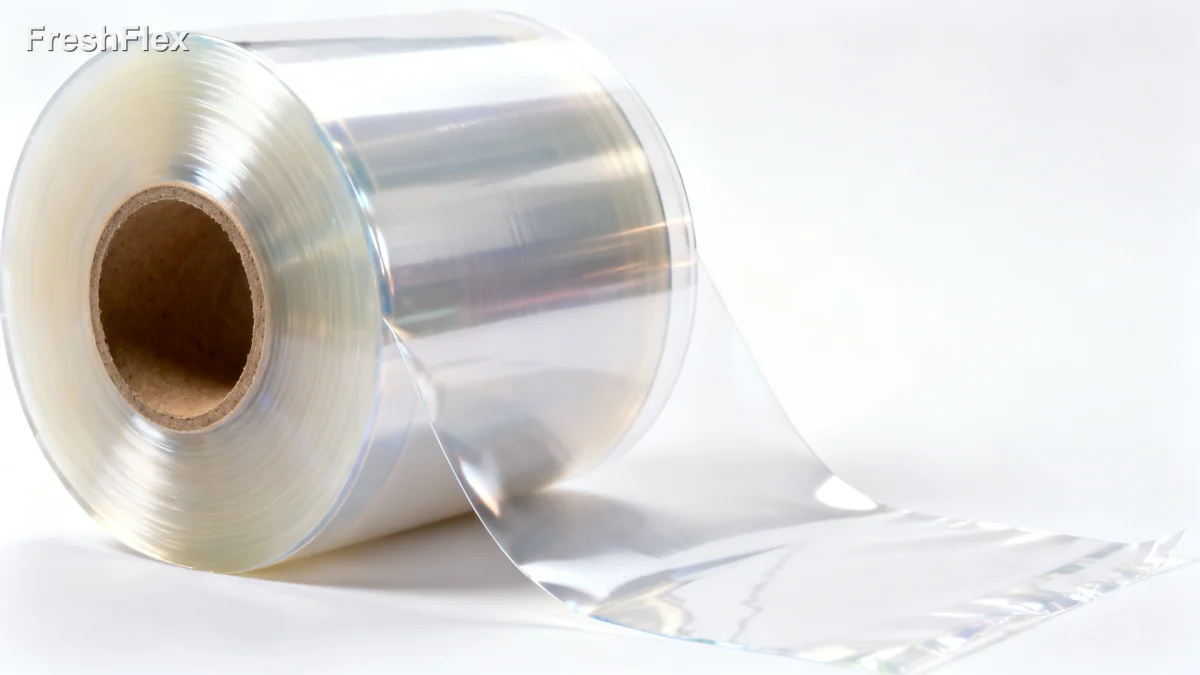
A typical EVOH film for ready meals is a coextrusion or lamination of five to nine layers. The EVOH core provides the oxygen barrier, while outer layers supply moisture resistance, sealability, and mechanical strength. Common structures include:
- PE / tie / EVOH / tie / PE – for chilled ready meals and sous-vide
- PP / tie / EVOH / tie / PP – for retort and microwaveable trays
- PET / EVOH / PE – for lidding films and flow wraps
The tie layers are critical: they bond the EVOH to the adjacent polyolefin layers, preventing delamination during thermal processing or flexing. FreshFlex engineers optimise tie-layer chemistry and EVOH grade to match your specific retort or microwave conditions.
Key Technical Specifications
When specifying EVOH film for ready meals, consider these parameters:
- Oxygen transmission rate (OTR): Typically 0.1–1.0 cc/m²/day at 23°C, 50% RH for standard grades. High-barrier grades can go below 0.1.
- Ethylene content: Lower ethylene (27–32 mol%) gives better oxygen barrier but higher moisture sensitivity. Higher ethylene (38–44 mol%) offers better moisture resistance but slightly lower OTR performance.
- Thickness: EVOH core layers usually range from 5 to 30 microns, depending on target shelf life.
- Thermal stability: Retort grades withstand 121°C for 30 minutes without significant barrier loss.
- Seal strength: Peelable or weld seals can be tailored for easy-open convenience.
These values vary by supplier and formulation. Always request a datasheet and validate with your own shelf-life testing.
Application Guide: Matching EVOH Film to Ready Meal Types
Chilled Ready Meals
Chilled meals (e.g., pasta, curries, salads) require a barrier against oxygen and moisture to maintain texture and prevent microbial growth. A PE/EVOH/PE structure with an OTR below 1.0 cc/m²/day typically extends shelf life from 5–7 days to 14–21 days under proper cold-chain conditions. FreshFlex recommends a 7-layer coextrusion with a 12-micron EVOH core for optimal balance.
Frozen Ready Meals
Frozen meals demand excellent moisture barrier and puncture resistance at low temperatures. EVOH films with a higher ethylene content (38–44 mol%) perform well here, as they resist moisture uptake that can degrade barrier properties. A common structure is PE/EVOH/PE with a 15–20 micron EVOH layer, often paired with an anti-fog additive for clear visibility.
Retort and Shelf-Stable Ready Meals
Retort meals are sterilised at 121°C, which can challenge standard EVOH. FreshFlex offers retort-grade EVOH films with special tie layers and heat-stabilised EVOH that maintain barrier integrity after thermal processing. These films are ideal for ready meals in pouches or trays that require a 12–24 month shelf life at ambient temperature.
Microwaveable Ready Meals
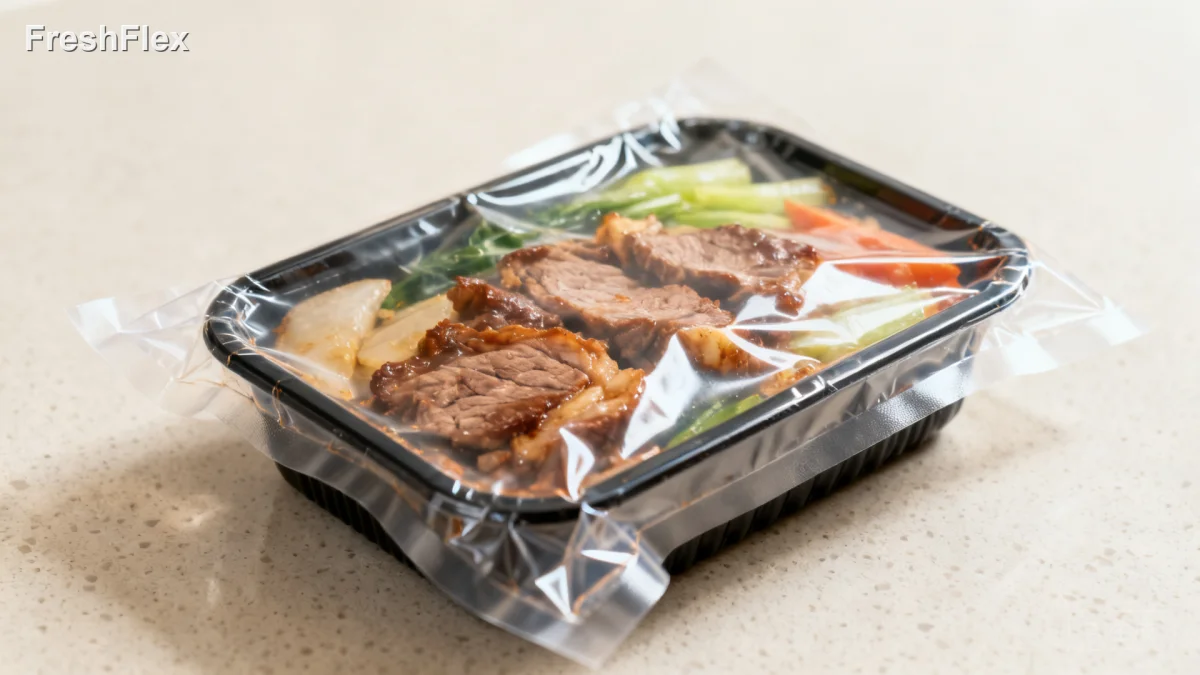
For microwaveable trays and lidding, the film must withstand rapid heating without warping or seal failure. PP-based EVOH structures are preferred for their higher melting point. A peelable seal layer allows consumers to vent steam safely. FreshFlex can supply lidding films with controlled peel strength (typically 3–8 N/15mm) for easy opening.
Cost/Benefit Analysis: Is EVOH Worth It?
EVOH film costs more per kilogram than standard PE or PP films—often 2–4 times the price. However, the total cost of ownership tells a different story. By extending shelf life, EVOH reduces:
- Food waste: Fewer expired meals mean higher sell-through and lower returns.
- Preservatives: Clean-label products can command premium prices.
- Logistics costs: Longer shelf life enables broader distribution and fewer urgent reorders.
- Packaging downgauging: High barrier allows thinner films, offsetting material cost.
For a typical chilled ready meal, switching from a standard PE film to a FreshFlex EVOH structure might increase packaging cost by 15–30%, but can reduce waste by 5–10% and extend distribution reach. The payback is often within 6–12 months.
Sourcing EVOH Film in Southeast Asia
Vietnam, Indonesia, and Thailand are major ready meal producers and exporters. When sourcing EVOH film, consider:
- Local supply: Regional converters reduce lead times and shipping costs.
- Technical support: Choose a partner who can help with structure design and shelf-life testing.
- Compliance: Ensure films meet food-contact regulations (e.g., FDA, EU 10/2011, local standards).
- Consistency: EVOH barrier can vary with humidity; verify supplier quality control.
FreshFlex manufactures high-barrier EVOH films in the region, with dedicated technical teams in Ho Chi Minh City, Jakarta, and Bangkok. We help you select the right grade, run trials, and scale up production.
Conclusion
EVOH film is a proven solution for ready meal packaging, offering superior oxygen barrier, aroma retention, and shelf-life extension. By understanding the technical trade-offs and application requirements, you can choose a structure that balances performance and cost. FreshFlex is ready to support your transition to high-barrier packaging—contact us for samples and a consultation.